I think land tenure, and questions about access to land, are one of the most neglected aspects of aid and development initiatives and conflict resolution initiatives. Sure, big institutions like the World Bank and the Asian Development Bank realise they're important, but how many NGOs deal with these issues? In Australia at least, one of the primary criticisms of AusAID that I hear from activists and those working for NGOs is that the money is directed at "too high a level" - ie it's directed at reform of legal and administrative mechanisms, rather than at what some would call "the grassroots". However land tenure is one of the very areas in which we see exactly why it might be not only flawed, but dangerous, to assume that such distinctions can be drawn.
I was reminded of this last year when I attended a workshop with people from around the world who'd gathered to talk about housing, land and property issues in post-conflict societies. I don't know much about the conflict in the Sudan, but I now realise that land tenure underlies this conflict as it does so many others. Check out this article for more: Sudan: The Question of Land.
Wednesday, April 04, 2007
Thousands at risk of hunger and disease

(Photo from The Age)
The Solomon Islands is facing a major humanitarian crisis after the earthquake and tsunami, with tens of thousands of people at risk of hunger and infection due to isolation from relief efforts.
The official death toll has risen to 24. 13 villages are reported to have been destroyed. Some 50-60,000 people have been left homeless - that's more than 10% of the population!
Thousands of people continue to stay up in the hills overlooking Gizo, too scared to return to the coast but also with extremely limited access to food, water and shelter (drinking water has been destroyed by landslides and sea water). It is likely that the numbers of dead, injured and homeless will continue to rise, not only as a result of the initial hazard event, but because the Solomon Islands Government has warned that it could take 2 days to deliver aid to the area.
RAMSI officials have expressed frustration that their capacity to respond has been limited by the lack of an invitation to join relief efforts by the Solomon Islands Government. It is likely that recent tensions between RAMSI and the Solomon Islands Government plays a role in this, however the National Disaster Management Office has said that the Government needs to assess the area before it can determine what role RAMSI can play in relief efforts...sounds fair to me, although I'm not there on the ground!!
It should be noted that Australian newspapers and television news reports have neglected to mention that while the Solomon Islands has suffered an extroardinarily serious disaster, Solomon Islanders are also incredibly resilient. This was emphasised by Danny Kennedy - owner of the dive shop in Gizo - on Triple J yesterday, who noted that Solomon Islanders are incredibly tough and are already mobilising to respond to the need in their own communities. The coping strategies of local people must be recognised for relief efforts to be effective.
Tuesday, April 03, 2007
Solomon Islands tsunami: on the links between disasters and development
 Aid workers have warned of a humanitarian crisis in Solomon Islands following yesterday's earthquake and tsunami (Reuters). As is the case with many disasters, this one is a product of the interaction of a natural hazard with existing sources of vulnerability, including:
- existing poor infrastructure
- damage to already limited water supplies
- a tropical climate in which infection can set in very quickly
- limited local supplies of antibiotics and anti-malarials
- damage to housing in an area in which malaria is prevalent
- inundation of gardens in a country where most people depend on subsistence agriculture (even in urban areas)
- damage to already limited stores of dry food
- the loss of boats in poor communities which are heavily reliant on fishing
For a list of Australian agencies working in Solomon Islands, click here.
Solomon Islands earthquake and tsunami: the day after
MAP: Solomon Islands tsunami damage (from AlertNet)
 Solomon Islands
At least seven people died in Gizo (the provincial capital of the Western Province), many trapped in their homes when waves swept through the town. Other bodies could be seen but not reached because of huge waves crashing on to the shore (AlertNet). Australian newspapers have reported that at least 15 people died and hundreds are missing in Western Province (the Age)
The wave is reported to have been up to 10 metres high in some villages.
The Prime Minister has noted that the toll could have been higher if it had happened a few hours earlier, when people would have been sleeping.
Waves reach PNG
Waves of between one and three metres hit parts of the coastal area of PNG. Waves of 2-3 metres hit Rossel Island and Milne Bay. Buka, Rabaul and Kandrian were hit by waves as high as 1 metre (PNG NBC)
International assistance for Solomon Islands
Australia has made an initial offer of up to $2 million in emergency and reconstruction assistance to the Solomon Islands government (AusAid media release).
 Solomon Islands
At least seven people died in Gizo (the provincial capital of the Western Province), many trapped in their homes when waves swept through the town. Other bodies could be seen but not reached because of huge waves crashing on to the shore (AlertNet). Australian newspapers have reported that at least 15 people died and hundreds are missing in Western Province (the Age)
The wave is reported to have been up to 10 metres high in some villages.
The Prime Minister has noted that the toll could have been higher if it had happened a few hours earlier, when people would have been sleeping.
Waves reach PNG
Waves of between one and three metres hit parts of the coastal area of PNG. Waves of 2-3 metres hit Rossel Island and Milne Bay. Buka, Rabaul and Kandrian were hit by waves as high as 1 metre (PNG NBC)
International assistance for Solomon Islands
Australia has made an initial offer of up to $2 million in emergency and reconstruction assistance to the Solomon Islands government (AusAid media release).
Monday, April 02, 2007
Solomon Islands earthquake and tsunami: counting the cost
From various sources (e-groups, online reports, contacts, contacts with contacts etc) I've heard that things in the Solomons are pretty bad...this report from the Age sums up what I've been hearing:
Residents of the Solomons Islands have told of terrifying scenes following the 8.1-magnitude earthquake and the tsunami that washed ashore in its wake, wiping out homes and businesses on the shore.
Residents of the Solomons Islands have told of terrifying scenes following the 8.1-magnitude earthquake and the tsunami that washed ashore in its wake, wiping out homes and businesses on the shore.
There are unconfirmed reports of eight deaths, including six children, officials said, and a rise in the toll is expected.
The country's Prime Minister's office reports that at least six people have been killed and several are missing as "10-metre-high waves continue to crash [on] coastal villages".
Reports from police at Gizo - the capital of the western province and a popular destination for divers - said water now completely covered the lower areas of the town, while waves continued to pound the nearby towns of Noro and Munda.
About 50 homes in Gizo - just 45 kilometres from the centre of the quake - had reportedly been flattened and boats had been washed into the town.
There were reports that large waves had penetrated 500 metres inland, wiping out villages.
...
Some residents have been reported missing from Gizo, which has a population of about 20,000, and the hospital has been damaged.
...
Robert Iroga, editor of the Solomon Star newspaper, said it was too early to put a death toll on the disaster but that he had received reports from locals that bodies were "floating in the sea" in one area.
He said reports indicated one island close to the provincial airport had been totally covered by the wave.
...
Iroga, who is based in Honiara, said thousands of people could be affected by the tsunami.
"It's a time of year when a lot of people are staying in the villages, the schools are on a break," he told ABC radio.
...Ms Kennedy said there was no early warning about the tsunami.
Everyone from the village had taken refuge on top of the hill, she said.
...
"It took all the houses down, the houses that are near the shore."
Ms Kennedy said the hospital is still being evacuated to higher ground.
"All the patients in the hospital, now a truck is giving them a lift up to the top of the hill.''
...
Danny Kennedy, the owner of the dive shop, estimated the height of the wave at 3 metres.
"I'm driving down the street — there are boats in the middle of the road, buildings have completely collapsed and fallen down," Mr Kennedy said.
"We're just trying to mobilise water and food, and shelter for people at the moment because . . . in the town alone there's going to be between 2000 and 3000 homeless. It's not a very good scene at the moment.''
...
"Some villages are completely wiped out," National Disaster Council chairman Fred Fakari told journalists in the capital Honiara this afternoon.
...
The disaster council decided not to declare a state of emergency following a meeting because of the lack of information, Fakari said.
...
Phone lines and electricity were down in the Western Province capital of Gizo, which was just 45km from the centre of the quake, hampering efforts to find out the extent of the damage.
There was still no idea about damage or casualties in more isolated areas in the west, he said. A Solomons government patrol boat was being sent from Honiara to assess the situation.
...
The Pacific nation's western province is its wealthiest, generating revenue from the thousands of tourists — many of them Australian and New Zealanders — who flock to the resorts and beaches.
"The resorts and hotels and other tourism-related facilities might be seriously affected," Mr Iroga said.
...
There were also fears of disease outbreaks following the devastation left by the tsunami, Mr Iroga said.
Many Gizo residents drew their water supply from wells which have been flooded by the massive wave.
"We need urgent assistance from abroad as we can't fund (the response to) this sort of tragedy and a disaster of this magnitude."
From the capital Honiara, Solomon Islands Broadcasting Corporation said residents on Simbo island had reported waves travelling up to 200 metres inland, damaging homes.
...
Blogging as it happens: earthquake and tsunami in Solomon Islands...and elsewhere?
An earthquake measuring somewhere between 7.6 (if you read the Solomon Islands news) and 8.1 (based on the Australian media) on the Richter scale hit New Georgia this morning. The shake caused a tsunami to hit parts of the province, and it appears that damage in Gizo (the capital of the province) has been extensive with at least one death (see here). Reuters reports that many homes have been destroyed and three people have been found dead. This is saddening given that as far as I am aware (and based on my impressions from forums such as the Lonely Planet Thorn Tree), tourism in New Georgia was doing ok (while it's been virtually non-existent in other parts of the country since the Tensions).
The Australian Bureau of Meteorology has warnings out for the entire eastern coast, however the threat appears to have dissipated (see here). Judging by some of the internet forums I'm on, the 2005 Tsunami appears to have (predictably) generated a fair degree of paranoia!
Another article from Reuters suggests that areas north of the Solomon Islands should not be significantly affected.
Edit: the death toll is climbing - latest reports from Reuters state that 2 villages are inundated and 4 people are missing in the isolated society islands.
For regular updates, check AlertNet and Reuters.
The Australian Bureau of Meteorology has warnings out for the entire eastern coast, however the threat appears to have dissipated (see here). Judging by some of the internet forums I'm on, the 2005 Tsunami appears to have (predictably) generated a fair degree of paranoia!
Another article from Reuters suggests that areas north of the Solomon Islands should not be significantly affected.
Edit: the death toll is climbing - latest reports from Reuters state that 2 villages are inundated and 4 people are missing in the isolated society islands.
For regular updates, check AlertNet and Reuters.

Thursday, March 29, 2007
Understanding global issues in our local context
I haven't posted for ages...
But Kate has been busy. She has a great article here and here about her realisation that she could tackle poverty and injustice in her own backyard, not just by studying aid and development and then dashing off overseas. A snippet:
When I returned home, I started studying International Development, wanting to find positive ways to use my privileges. So I spent a lot of time learning about how sustainable development could create improvements in the quality of human life. On a personal level, I
began giving money away to overseas development projects. But I was increasingly frustrated at the gap between my beliefs and my actions. My life inMelbourne
But Kate has been busy. She has a great article here and here about her realisation that she could tackle poverty and injustice in her own backyard, not just by studying aid and development and then dashing off overseas. A snippet:
When I returned home, I started studying International Development, wanting to find positive ways to use my privileges. So I spent a lot of time learning about how sustainable development could create improvements in the quality of human life. On a personal level, I
began giving money away to overseas development projects. But I was increasingly frustrated at the gap between my beliefs and my actions. My life in
Tuesday, March 06, 2007
State of Emergency Declared in Vanuatu after clashes betwen informal settlers
Vanuatu's council of ministers have declared a State of Emergency in the capital of Port Vila after violent clashes on the weekend resulted in several deaths, dozens of hospitalisations and the destruction of homes and property.
The State of Emergency was declared on March 4 and will last until March 14. The State of Emergency forbids public meetings in Vila, restricts movement between other islands and Efate, and also some movement between suburbs of the capital.
The primary protagonists of the conflict in Port Vila were two distinct groups of residents of ‘Blacksands’, an informal settlement on the outskirts of Port Vila. Pre-existing social tensions escalated into violence when several hundred residents originating from Tanna and Ambrym clashed in Port Vila after the death of a woman was blamed on witchcraft.
While these riots differ in significant respects from the violence that has plagued Solomon Islands in recent years, in both instances the root causes of conflict include ethnic and cultural differences, livelihood insecurity, and a failure of land law and administration to provide security of tenure.
As is the case in Solomon Islands, informal settlement is a growing issue in Vanuatu, and is associated with rising civil insecurity. Urban areas around Port Vila and Luganville are expanding as people from rural areas move to urban areas in search of employment and better access to infrastructure. Rapid urbanisation and competition for land has been heightened by the fact that land in Vanuatu is extremely attractive to overseas investors. The land available for settlement by migrants under the ‘Western’ legal system is therefore very limited, and large numbers of migrants are either ‘squatting’ on customary land, or settling on customary land in accordance with arrangements with the customary landholders.
Large numbers of ni-Vanuatu in Port Vila are now living in informal settlements with insecure tenure. These settlements frequently suffer from inadequate access to water and sanitation due to the refusal of the customary landowners to provide, or allow the provision of, such infrastructure because of their fear of permanent settlement on their land. Blacksands is one of the better-known of these informal settlements. Most children in Blacksands do not attend school, many of its young people are unemployed, and the settlement has a reputation for social disorganisation and crime. Stiff competition for access to land, paid employment and other resources contributes to social tension, which periodically escalates into violence. As was the case in Honiara, insecurity of tenure is therefore associated with both livelihood insecurity and civil insecurity.
The State of Emergency was declared on March 4 and will last until March 14. The State of Emergency forbids public meetings in Vila, restricts movement between other islands and Efate, and also some movement between suburbs of the capital.
The primary protagonists of the conflict in Port Vila were two distinct groups of residents of ‘Blacksands’, an informal settlement on the outskirts of Port Vila. Pre-existing social tensions escalated into violence when several hundred residents originating from Tanna and Ambrym clashed in Port Vila after the death of a woman was blamed on witchcraft.
While these riots differ in significant respects from the violence that has plagued Solomon Islands in recent years, in both instances the root causes of conflict include ethnic and cultural differences, livelihood insecurity, and a failure of land law and administration to provide security of tenure.
As is the case in Solomon Islands, informal settlement is a growing issue in Vanuatu, and is associated with rising civil insecurity. Urban areas around Port Vila and Luganville are expanding as people from rural areas move to urban areas in search of employment and better access to infrastructure. Rapid urbanisation and competition for land has been heightened by the fact that land in Vanuatu is extremely attractive to overseas investors. The land available for settlement by migrants under the ‘Western’ legal system is therefore very limited, and large numbers of migrants are either ‘squatting’ on customary land, or settling on customary land in accordance with arrangements with the customary landholders.
Large numbers of ni-Vanuatu in Port Vila are now living in informal settlements with insecure tenure. These settlements frequently suffer from inadequate access to water and sanitation due to the refusal of the customary landowners to provide, or allow the provision of, such infrastructure because of their fear of permanent settlement on their land. Blacksands is one of the better-known of these informal settlements. Most children in Blacksands do not attend school, many of its young people are unemployed, and the settlement has a reputation for social disorganisation and crime. Stiff competition for access to land, paid employment and other resources contributes to social tension, which periodically escalates into violence. As was the case in Honiara, insecurity of tenure is therefore associated with both livelihood insecurity and civil insecurity.
Thursday, December 07, 2006
Of droughts and flooding rains
5 December 2006
It has long been argued that Victoria's weather is growing hotter and drier, now research conducted at Monash University has proved it is getting more extreme.
And with more than 50 fires now blazing throughout the state, it also grows more vulnerable to flooding.
Professor Amanda Lynch, from the Monash Climate Program, has been working with a PhD student, Lee Tryhorn, to establish a database on bushfire and flood events in Victoria. The database records where and when fires have occurred and how significant they were. The same applies to flooding.
"There does seem to be an indication that fires are on the rise across Victoria," Professor Lynch says. "Anecdotally, there are more fires and they are worse than they were in the past. Things have definitely grown drier, the weather has grown warmer and it is more conducive to fires."
But the researchers were surprised to find a link between the rising number of bushfires and an increase in heavy rainfalls and the severity of floods.
"It does seem strange, but it's been found in other parts of the world that while rainfall can be going down, they are still experiencing extreme floods. There are more extreme dries but also more extreme wets."
Ms Tryhorn's study focused on serious bushfires in the Victorian Alpine shire in January 2003 that were followed by thunderstorms and flash flooding, which claimed the life of a local woman. The fires burnt for two months, after several years of below average rainfall.
Significantly, she found that the bushfire and drought conditions actually increased the risk of flooding.
"The soil is hydrophobic; it is very dry and won't absorb water," Professor Lynch says. "It is also black, so that heats the surface and the surface heats the atmosphere above it and that makes the thunderstorms more intense."
The finding has implications for handling bushfire emergencies, particularly in the Alpine regions, she says.
"We can say that emergency preparedness should include the potential for flash flooding after fires in alpine regions. That's what we are telling the locals. With an enhanced bushfire season there is always the potential for more of these, but given the drought, there simply may not be enough moisture. The effects of fire last for several months, so if the drought breaks there may be a problem."
For more information please call Renee Barnes, Media and Communications on 9905 2020 or 0413 753 366.
Wednesday, December 06, 2006
2006 Housing Rights Awards
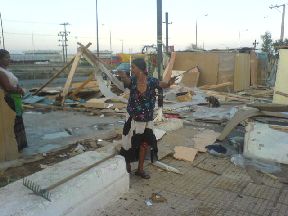
Nigeria, the Philippines and Greece Cited for Severe Human Rights Violations by Housing Rights Group
Nigeria, the Philippines and Greece, have been named as recipients of the 2006 Housing Rights Violator Awards by the Geneva-based Centre on Housing Rights and Evictions (COHRE), for their systematic violation of housing rights and continued failure to abide by their international legal obligations. At the same time, COHRE has presented seven courageous Chinese Human Rights activists with the 2006 Housing Rights Defender Awards.
Each year, COHRE bestows its Housing Rights Violator Awards on three governments or public institutions guilty of particularly serious housing rights violations in the preceding year. COHRE has issued it Violator Awards since 2002.
COHRE’s Executive Director (a.i), Jean du Plessis, said, “Although many governments continue to violate the right to adequate housing, in 2006 Nigeria, the Philippines and Greece stand out for their appalling disregard for this basic human right. The Nigerian Government has forcibly evicted more than two million people from their homes since 2000. Although the Nigerian Constitution affirms that: 'the State shall direct its policy towards ensuring...that suitable and adequate shelter...are provided for all citizens', the Federal Government has consistently neglected its responsibilities and violated its obligations under international law, including the African Charter on Human and Peoples’ Rights. These widespread and ongoing evictions in Nigeria have resulted in the massive displacement of millions of people, with a spiralling effect on health, education, employment and family cohesion.”
“The Government of the Philippines continues to evict hundreds of thousands of people in the name of ‘beautification’ and ‘development’, with the urban poor being the worst affected. More than 145,000 people (29,000 families) have already been evicted from their homes in Metro Manila and Bulacan province since early 2005 due to the rehabilitation of the Philippines National Railway system, referred to as the 'Northrail-Southrail Linkage Project.’ COHRE’s research reveals that most of the evictees have been moved to relocation sites where living conditions are appalling due to a lack of basic services such as potable water, electricity and sanitation facilities. The unsanitary conditions and an outbreak of dengue fever at the Southville relocation site in Cabuyao have claimed the lives of 12 infants and children this year. Forced evictions and demolitions are also being carried out in preparation for the 12th ASEAN Summit to be hosted by the Philippines next week. The evictions and demolition in Metro Cebu have left more than 3,000 people homeless since September 2006,” he said.
Du Plessis added, “Roma communities in Greece continue to face pervasive and persistent discrimination in access to housing. A majority of Roma in Greece live in extremely poor conditions - lacking access to basic services such as water and electricity - and frequently face segregation and forced eviction by local authorities. The conditions in which these communities live are dehumanising and constitute a grave human rights violation by the Government of Greece. It is completely unacceptable for a long-standing member of the European Union (EU) to allow such a situation to continue within its borders. What we are facing here is the blatant and deliberate exclusion of a particular group, creating a third world reality within a wealthy European State. The shacks of the Roma in Patras, Athens or Asproprygos are no different from those in slums in Nairobi or Manila. These evictions clearly indicate that the Greek government is not taking its international legal obligations seriously and is turning a blind eye to local governments' systematic abuse of the human rights of Roma in Greece.”
The Housing Rights Defender Award is presented annually by COHRE to an individual who has shown outstanding commitment to the realisation of housing rights for all people. For the first time since the inception of this award in 2003, it will be presented to a number of housing rights activists rather than a single person. The joint recipients of the 2006 Housing Rights Defender Award are: Fu Xiancai; Ma Yalian; Liu Zhengyou; Huang Weizhong; Chen Xiaoming; Xu Zhengqing; and Zheng Enchong.
Du Plessis, said, “These seven Chinese activists have displayed exemplary commitment, courage and perseverance in their struggles for the land and housing rights of hundreds of farmers, workers and residents in China. They are inspirational examples to every person, community and organisation working for the cause of human rights around the world. The Chinese Government is notoriously oppressive towards human rights activists. Land and housing rights violations including mass forced evictions are common, while legal remedies are scarce for those seeking to assert their rights. The work of these activists, undertaken at grave personal risk to them, their families and fellow activists, has played a catalytic role in bringing to light the unjust practices of the Chinese Government. COHRE is therefore honoured to present the 2006 Housing Rights Defender Award to: Fu Xiancai; Ma Yalian; Liu Zhengyou; Huang Weizhong; Chen Xiaoming; Xu Zhengqing; and Zheng Enchong for their fearless commitment to housing rights in an environment that is hostile to such ideals.”
COHRE’s Housing Rights Protector Award, presented annually to a government or other public institution demonstrating a truly exceptional commitment to the protection and promotion of housing rights, has not been awarded this year as there is no clear worthy candidate.
Du Plessis said, “Despite the widespread recognition of the human right to adequate housing in international law, violations continue to occur on a massive scale both in the developed and developing worlds. This year, COHRE could not identify a government or public institution that is worthy of recognition for its commitment to the protection and promotion of housing rights. There are good legislative, policy and implementation programmes underway in numerous countries, which do promote the cause of housing rights to some degree, but after careful consideration we came to the conclusion that none of these were sufficiently path-breaking to qualify as a convincing candidate for housing rights protector. The dearth of contenders for the 2006 Housing Rights Protector Award is a clear indicator that more convincing and dramatic examples of housing rights protection are needed to make a sustainable impact in successfully addressing the land and housing rights challenges facing countries today.”
A newly released COHRE report, Forced Evictions: Violations of Human Rights – Global Survey No. 10, reveals that nearly 2 million people in Africa and over 2.1 million people in Asia and the Pacific have been forcibly evicted from their homes since 2003. Furthermore, nearly 153,000 people in the Americas and over 16,000 people in Europe have been evicted from their homes in the same period.
“The most disturbing aspect of these numbers, is the fact that they are just a sample, based on our research of media reports, and evictions reported to COHRE either by affected persons or by members of our growing global network of partners in the struggle against forced evictions. The total given is merely the tip of the iceberg. The world is, clearly, in the midst of a housing rights and evictions crisis, caused by the fact that governments in both developed and developing countries are not taking their international legal obligations seriously,” said Du Plessis.”
For interviews with Jean du Plessis or additional information please contact COHRE’s Media Officer, Radhika Satkunanathan on +41-22-7341028, +61-400-899474 or media@cohre.org
Tuesday, November 28, 2006
The only time we'll ever make a women's magazine...
...yep, there's a pic of Glamazons Wei and Bec in the latest Frankie magazine.
Heh heh...who ever thought academia would get you covered by a fashion mag?!
We were hoping for free clothes, but unfortunately there weren't any. You can see the bit on us (which appears as part of a longer aticle in Frankie) on Benjamin Law's website (click image below).

Heh heh...who ever thought academia would get you covered by a fashion mag?!
We were hoping for free clothes, but unfortunately there weren't any. You can see the bit on us (which appears as part of a longer aticle in Frankie) on Benjamin Law's website (click image below).
Thursday, November 23, 2006
What's farming got to do with it?
Farmer Jess is laughing about the fact that her Masters in Humanitarian Action will actually result in a Masters in Ag Science...so what's Ag Science got to do with humanitarian action?
Several years ago I undertook an in-depth analysis of vulnerability in the Tambo Valley, located in East Gippsland Shire, in north-east Victoria. While focusing on the underlying root causes of the 1998 flood disaster, I found that historical analysis showed a pretty clear pattern - when a drop in commodity prices coincided with drought, farmers would over-stock their land because they didn't want to sell their stock at such low prices. This would compound the effects of drought, resulting in over-grazing, which is particularly problematic in this area, which is characterised by very steep terrain and poor quality soils. Financial constraints of farmers limited their ability to maintain their farms, so rabbit numbers would increase. The small populations have - at least since the end of the gold mining era - been vulnerable to any economic change, and the entire community would suffer as farmers did. Sometimes, bushfires would occur before the drought broke, denuding the landscape even further. When the drought did finally break, it would often do so with torrential rain, which would tear down the steep, denuded slopes, taking with it the valuable top soil and leaving a trail of destruction in its wake. These patterns aren't unique to the Tambo Valley, or even to Australian contexts - similar patterns can be found in many places throughout the world. Since natural disasters are intimitely related to the ways we use the land and other resources, the link between agricultural science and humanitarian action doesn't seem a particularly tenuous one to me. Indeed, since many civil conflicts stem from the struggle for secure livelihoods, I think it's often going to be helpful to understanding the root causes of civil conflict too.
An interesting article that again raises the links between livelihood security and vulnerability to natural disaster in the Australian context was published in The Age yesterday: Fire hits drought-ravaged farm. The phrase, "it's just one thing after another" was one I heard regularly while conducting my research in the Tambo Valley - again and again, people said "it was just one thing after another", and similarly, I regularly heard the phrase "it was the straw that broke the camel's back" to describe "The Big Flood" of 1998. Here, fire has hit farmers already struggling to cope with the effects of the drought - in academic-speak, they were already vulnerable, they had more limited resilience and their coping mechanisms were already weakened by the drought.
Several years ago I undertook an in-depth analysis of vulnerability in the Tambo Valley, located in East Gippsland Shire, in north-east Victoria. While focusing on the underlying root causes of the 1998 flood disaster, I found that historical analysis showed a pretty clear pattern - when a drop in commodity prices coincided with drought, farmers would over-stock their land because they didn't want to sell their stock at such low prices. This would compound the effects of drought, resulting in over-grazing, which is particularly problematic in this area, which is characterised by very steep terrain and poor quality soils. Financial constraints of farmers limited their ability to maintain their farms, so rabbit numbers would increase. The small populations have - at least since the end of the gold mining era - been vulnerable to any economic change, and the entire community would suffer as farmers did. Sometimes, bushfires would occur before the drought broke, denuding the landscape even further. When the drought did finally break, it would often do so with torrential rain, which would tear down the steep, denuded slopes, taking with it the valuable top soil and leaving a trail of destruction in its wake. These patterns aren't unique to the Tambo Valley, or even to Australian contexts - similar patterns can be found in many places throughout the world. Since natural disasters are intimitely related to the ways we use the land and other resources, the link between agricultural science and humanitarian action doesn't seem a particularly tenuous one to me. Indeed, since many civil conflicts stem from the struggle for secure livelihoods, I think it's often going to be helpful to understanding the root causes of civil conflict too.
An interesting article that again raises the links between livelihood security and vulnerability to natural disaster in the Australian context was published in The Age yesterday: Fire hits drought-ravaged farm. The phrase, "it's just one thing after another" was one I heard regularly while conducting my research in the Tambo Valley - again and again, people said "it was just one thing after another", and similarly, I regularly heard the phrase "it was the straw that broke the camel's back" to describe "The Big Flood" of 1998. Here, fire has hit farmers already struggling to cope with the effects of the drought - in academic-speak, they were already vulnerable, they had more limited resilience and their coping mechanisms were already weakened by the drought.
Wednesday, November 22, 2006
Stay...or Go?

Fires start early this year...and so far the death toll is already at 1. It's going to be a bad summer, and new research shows that bushfires cause the greatest number of deaths and injuries of any natural disaster in Australia.
For some of the most recent and best thinking on bushfires, check out the Bushfire Cooperative Research Centre. There are some fantastic resources on what you should do in preparation for or during a bushfire, including the background briefings for fire managers here.
See also this note on a recent workshop I was involved in, looking at the legal and other aspects of 'Stay or Go' policies and community warnings.
Man Dies Protecting House from Bushfire
By 7 News
A man has died while trying to protect his home from encroaching bushfires, as wind changes overnight increased the risk of blazes burning out of control in New South Wales.
Police say the unnamed man was overcome by smoke and flames on his rural property near Nelligan, on the NSW south coast late on Tuesday.
Dozens of bushfires are burning across the south east of Australia, but improved weather conditions in Victoria and South Australia mean the danger of flames spreading to homes there has decreased.
Around 4,000 firefighters worked through the night in South Australia, where 60 fires are burning.
And in Victoria, a total fire ban has been lifted after crews managed to contain a blaze which has burnt out more than 9,000 hectares in the west of the state.
But in New South Wales, unpredictable winds have hampered firefighters' efforts to tackle blazes which are raging across the state.
Firefighters in the Blue Mountains are urging householders to fire-proof their homes and prepare for the worst, as a fire which has already destroyed 14,500 hectares of park and private land continues to burn out of control.
Attempts to contain the flames by backburning overnight failed, and the state's Rural Fire Service is expecting further trouble on Wednesday, in the face of difficult winds and hot weather.
"It is very difficult," said Gillian Katz, of the NSW Rural Fire Brigade. "The wind has changed direction nearly every 10 minutes, it's making it very hard to predict the fire paths but there are some known fire paths through the Gore Valley that could be where the fire goes."
More than 40 water-bombing aircraft will be working to put out flames across New South Wales on Wednesday, 15 in the Blue Mountains alone.
A number of roads in the region have been closed, and heavy smoke is affecting driving conditions across the area - motorists are advised to take care. The Blue Mountains National Park is shut until further notice.
In Vanuatu, watching events in Tonga
I've left this far too long, but internet access is intermittent, expensive, and sloooooooow...
Tongan news can be found at Tonga Now. I'll update this post with some commentary once I have permission to publish it. I'm definitely no expert on anything to do with Tonga - I've never even been there for starters. It does, however, strike me that the recent riots bear similarities to those occurring elsewhere. While some commentators understand the riots in Tonga as an expression of pro-democracy sentiments, others see a link between urbanisation, poverty, the youth bulge, and the anger of young men that have limited or no access to education and employment. Some months ago I posted about the links between demography, livelihood security and civil security, drawing a link between Honiara and some Australian indigenous communities...and Port Moresby could be added to the list, as could Suva. But I'm out of my depth here...for better informed voices than mine, see:
This article from Radio New Zealand International; this article in Pacific Eye by the Director of the Tonga National Youth Congress; and this article, also in Pacific Eye, in which five youths involved in the riots were interviewed.
Speaking of youth, disenfranchisement, and anger...Vanuatu was recently found to be the "happiest nation on earth", and there are posters in the airport and copies of newspaper articles pasted to plenty of windows, but one can't help but wonder how long that 'happiness' is going to last. Local people working in NGOs certainly raise their eyebrows in bemusement when one brings up the subject, and here - as is the case in so many other places - one finds the "youth bulge", limited access to employment (at least in the formal economy - there's also the 'custom economy') and limited access to education. Here too there are young people moving to the urban areas in search of education and employment, and many are moving into informal settlements - it's not appropriate to call them 'squatter' settlements, as in many cases people from other islands are invited in to act as caretakers for the land by the customary landowners.
Last night I had dinner in the market with a new friend, at her mother's food stall. We watched the evening's devotions and chatted about our lives, faith and partners over a spectacular meal of Vanuatu steak, cucumber salad and tomato. We shared stories until late into the night, and I was reminded that despite the sometimes massive cultural differences, some things are universal. Her mother hugged me goodbye and told me to come back soon, and I felt the warm rush of being cared for despite being so new - a feeling I haven't really felt since I was in the Solomon Islands, where an Aunty I was only just getting to know sat up all night massaging me and wiping the sweat from my face as I struggled through a feverish night. As in the Solomons, I'm suddenly, beautifully aware of my identity as a woman, sharing specifically female aspirations and views with other women. I know who I am here, despite not wearing makeup, having long hair or particularly pretty clothes - I don't discount the fact that gender norms can be stifling and discriminating, but in my own society, femininity is often marked by whether a woman wears a dress or lipstick. The experiences of other women are undoubtedly different, but as a white, Western woman (and therefore sometimes considered an 'honorary male'), I have found working in highly-gendered societies liberating in the sense that I find myself returning to Australia with a stronger sense of womanhood and identity.
There's an older, white Australian guy staying in the hotel I'm staying at in Vila. I over-heard him talking to the staff they other day - they asked him whether he'd see his "girlfriend" today, and he laughed and said, "no, I'll have a new girlfriend today". I've been avoiding him ever since. Last night, I shared the cool night breeze, fresh peanuts and stories with a couple of the girls working in the hotel, and they filled me in further. Apparently this guy takes to the streets several times a day, starts chatting to some local woman, invites her back to the hotel saying he's lonely and he wants someone to share a sandwich with him, and once inside the room he propositions them. The girls - who are ni-Vanuatu themselves - explained that the ni-Vanuatu women are so friendly, that when this older, white Australian guy starts talking to them and saying how lonely he is, they believe him "because he's so old", and they feel sorry for him, "because he's so old", and so, they follow him back to share a sandwich. Apparently several of the women have run out of the room screaming, and then through reception where they have given a garbled account of these events to the girls at reception. I was furious, but began to see the (only slightly) funnier side of things once I confirmed with the girls that nobody has been "hurt". Yet.
I told the girls I'd heard the earlier conversation between this man and themselves, and they suddenly smiled weakly as they realised why I'd been behaving so differently when he was around, and when he was not. They were quite concerned that I felt safe staying in the hotel - I assured them that I did, and explained that I thought that he was nothing but a disgusting, sad old man. It's hard to know what to do - in fact it's hard to even know whether this man is picking up 'working women', or whether he is indeed picking up women who are just strolling down the street minding their own business.
Tongan news can be found at Tonga Now. I'll update this post with some commentary once I have permission to publish it. I'm definitely no expert on anything to do with Tonga - I've never even been there for starters. It does, however, strike me that the recent riots bear similarities to those occurring elsewhere. While some commentators understand the riots in Tonga as an expression of pro-democracy sentiments, others see a link between urbanisation, poverty, the youth bulge, and the anger of young men that have limited or no access to education and employment. Some months ago I posted about the links between demography, livelihood security and civil security, drawing a link between Honiara and some Australian indigenous communities...and Port Moresby could be added to the list, as could Suva. But I'm out of my depth here...for better informed voices than mine, see:
This article from Radio New Zealand International; this article in Pacific Eye by the Director of the Tonga National Youth Congress; and this article, also in Pacific Eye, in which five youths involved in the riots were interviewed.
Speaking of youth, disenfranchisement, and anger...Vanuatu was recently found to be the "happiest nation on earth", and there are posters in the airport and copies of newspaper articles pasted to plenty of windows, but one can't help but wonder how long that 'happiness' is going to last. Local people working in NGOs certainly raise their eyebrows in bemusement when one brings up the subject, and here - as is the case in so many other places - one finds the "youth bulge", limited access to employment (at least in the formal economy - there's also the 'custom economy') and limited access to education. Here too there are young people moving to the urban areas in search of education and employment, and many are moving into informal settlements - it's not appropriate to call them 'squatter' settlements, as in many cases people from other islands are invited in to act as caretakers for the land by the customary landowners.
Last night I had dinner in the market with a new friend, at her mother's food stall. We watched the evening's devotions and chatted about our lives, faith and partners over a spectacular meal of Vanuatu steak, cucumber salad and tomato. We shared stories until late into the night, and I was reminded that despite the sometimes massive cultural differences, some things are universal. Her mother hugged me goodbye and told me to come back soon, and I felt the warm rush of being cared for despite being so new - a feeling I haven't really felt since I was in the Solomon Islands, where an Aunty I was only just getting to know sat up all night massaging me and wiping the sweat from my face as I struggled through a feverish night. As in the Solomons, I'm suddenly, beautifully aware of my identity as a woman, sharing specifically female aspirations and views with other women. I know who I am here, despite not wearing makeup, having long hair or particularly pretty clothes - I don't discount the fact that gender norms can be stifling and discriminating, but in my own society, femininity is often marked by whether a woman wears a dress or lipstick. The experiences of other women are undoubtedly different, but as a white, Western woman (and therefore sometimes considered an 'honorary male'), I have found working in highly-gendered societies liberating in the sense that I find myself returning to Australia with a stronger sense of womanhood and identity.
There's an older, white Australian guy staying in the hotel I'm staying at in Vila. I over-heard him talking to the staff they other day - they asked him whether he'd see his "girlfriend" today, and he laughed and said, "no, I'll have a new girlfriend today". I've been avoiding him ever since. Last night, I shared the cool night breeze, fresh peanuts and stories with a couple of the girls working in the hotel, and they filled me in further. Apparently this guy takes to the streets several times a day, starts chatting to some local woman, invites her back to the hotel saying he's lonely and he wants someone to share a sandwich with him, and once inside the room he propositions them. The girls - who are ni-Vanuatu themselves - explained that the ni-Vanuatu women are so friendly, that when this older, white Australian guy starts talking to them and saying how lonely he is, they believe him "because he's so old", and they feel sorry for him, "because he's so old", and so, they follow him back to share a sandwich. Apparently several of the women have run out of the room screaming, and then through reception where they have given a garbled account of these events to the girls at reception. I was furious, but began to see the (only slightly) funnier side of things once I confirmed with the girls that nobody has been "hurt". Yet.
I told the girls I'd heard the earlier conversation between this man and themselves, and they suddenly smiled weakly as they realised why I'd been behaving so differently when he was around, and when he was not. They were quite concerned that I felt safe staying in the hotel - I assured them that I did, and explained that I thought that he was nothing but a disgusting, sad old man. It's hard to know what to do - in fact it's hard to even know whether this man is picking up 'working women', or whether he is indeed picking up women who are just strolling down the street minding their own business.
Monday, November 20, 2006
Squatter conference, U2 concert, and conversations in immigration queues
Last week I attended quite an inspirational conference sponsored by the Pacific Island Forum Secretariat on squatter settlements in Fiji. It was attended by squatters, and key people from government and non-government agencies working with squatters and on squatter settlement issues - it was extremely interesting to say the least, but I won't say any more as I imagine a report will be coming out some time soon. There's a paper from the last workshop that I'll try and link when I have time. There's also an interesting paper here:
Urban Squatters, Informal Sector and Livelihood Strategies of Poor in Fiji Islands - Manoranjan Mohanty
Flying back home for the U2 concert did my head in a bit - it was quite difficult going from discussing living conditions with squatters to a huge, over-the-top concert, even if it is lead by a band that's done at least a little for raising awareness of how "the other 80% live". Seeing a map of the African continent flashed across the screen while Bono talked about how we in the UK, the US and Australia need to be aware of the plight of Africa was a little difficult - Africa will be drowning under the weight of poorly-thought out aid soon, and there are millions of people in South and Central America, Asia and the South Pacific that are struggling for survival also.
I made the mistake of buying Marie Claire for my flight to Port Vila this morning - it featured a piece on St Tropez and the outrageous amounts people - including Bono - fork out for the luxury of hanging out there. I can't help but feel frustrated and disillusioned by the fact that there are celebrities like Bono who rant and rave about the plight of the poor, yet holiday at places where there's a requirement that you buy a $1000+ bottle of champagne every hour that you're lounging on the beach.
Touch down in Vila, and I find myself conversing with a middle-aged guy who's come over to go diving. He asks me what I'm doing here, and I explain that I'm working for an NGO. He looks surprised, and asks "what, are there poor people here?" I explain that yes, there's very limited health care, and people die of easily preventable diseases, and that malnutrition is a growing problem. I then say that there's many people in Vila living in appalling conditions in squatter settlements. He's visibly saddened by our short, shallow conversation, shaking his head and muttering "we just have no idea, do we? we have no idea..."
No, we do not.
Edit 23/11/06...I loved this final paragraph from an article on U2 in today's The Age: "Befitting the biggest band in the world, U2 spent the first week of their Australian tour at the exclusive five-star Palazzo Versace Resort on the Gold Coast and commuted between Brisbane via private jet, helicopter and limousine for rehearsals."
Hmmmm....U2, doin' their bit for global warming and the poor!
Urban Squatters, Informal Sector and Livelihood Strategies of Poor in Fiji Islands - Manoranjan Mohanty
Flying back home for the U2 concert did my head in a bit - it was quite difficult going from discussing living conditions with squatters to a huge, over-the-top concert, even if it is lead by a band that's done at least a little for raising awareness of how "the other 80% live". Seeing a map of the African continent flashed across the screen while Bono talked about how we in the UK, the US and Australia need to be aware of the plight of Africa was a little difficult - Africa will be drowning under the weight of poorly-thought out aid soon, and there are millions of people in South and Central America, Asia and the South Pacific that are struggling for survival also.
I made the mistake of buying Marie Claire for my flight to Port Vila this morning - it featured a piece on St Tropez and the outrageous amounts people - including Bono - fork out for the luxury of hanging out there. I can't help but feel frustrated and disillusioned by the fact that there are celebrities like Bono who rant and rave about the plight of the poor, yet holiday at places where there's a requirement that you buy a $1000+ bottle of champagne every hour that you're lounging on the beach.
Touch down in Vila, and I find myself conversing with a middle-aged guy who's come over to go diving. He asks me what I'm doing here, and I explain that I'm working for an NGO. He looks surprised, and asks "what, are there poor people here?" I explain that yes, there's very limited health care, and people die of easily preventable diseases, and that malnutrition is a growing problem. I then say that there's many people in Vila living in appalling conditions in squatter settlements. He's visibly saddened by our short, shallow conversation, shaking his head and muttering "we just have no idea, do we? we have no idea..."
No, we do not.
Edit 23/11/06...I loved this final paragraph from an article on U2 in today's The Age: "Befitting the biggest band in the world, U2 spent the first week of their Australian tour at the exclusive five-star Palazzo Versace Resort on the Gold Coast and commuted between Brisbane via private jet, helicopter and limousine for rehearsals."
Hmmmm....U2, doin' their bit for global warming and the poor!
Tuesday, November 14, 2006
Suva
Yesterday started with a rather amusing trip to the bus station in Nadi, where I intended to catch a bus to Suva (FD$10) but instead got waylaid by a persuasive taxi driver. Anyway, after waiting around for a while, we got enough people in the taxi to make it affordable, and off we went. As always, travelling like a local (albeit a wealthy one - most Fijians couldn't easily afford the $30 it cost us to get to Suva) was a good way to pick up a few tips on safety, and the conversations provided a wealth of information for my research. :)
So - once I'd got settled, I wandered about, went to a meeting, and then spent the afternoon bugging reception by making phone calls (phone calls have to be made by reception, and I made about 25 in the space of an hour!). Today I had back to back meetings...
I caught a glimpse of myself this morning and laughed, as I realised it only takes a day or two for me to pick up that solid walk, walking from the hips with arms swinging by my side...
Squatter settlements are clearly a growing problem in Fiji - it's all anyone will talk about with me (they're less interested in housing, sanitation etc in rural areas), and the numbers demonstrate why. I'm told that many of the resettlement programs are funded by aid - perhaps AusAID or NZAid (this is what I'm told, but I haven't confirmed it). Squatters are evicted (with some notice, it has to be said) and moved elsewhere...problem is, the new settlement often has plenty of physical infrastructure (water, roads etc) but no social infrastructure (schools, healthcare etc). On top of that is the fact that many of the squatters are single parent families, headed by women...in patriarchal and generally patrilineal Fiji, a woman estranged from her husband is particularly vulnerable, and with the exception of the lucky few, most have no option but to move to an urban centre and squat.
It's 5pm, which means I should be heading somewhere to eat and then catching a taxi back...I've only been here for a day and a half, but already I've been told numerous times not to wander the streets after about 5-5.30 pm. I've obviously never been here before, but there's plenty of anecdotal evidence as to how Suva has changed in the last decade. This shouldn't be a surprise -rapid urbanisation, growing poverty, and huge numbers of bored youth...what more could be expected?
So - once I'd got settled, I wandered about, went to a meeting, and then spent the afternoon bugging reception by making phone calls (phone calls have to be made by reception, and I made about 25 in the space of an hour!). Today I had back to back meetings...
I caught a glimpse of myself this morning and laughed, as I realised it only takes a day or two for me to pick up that solid walk, walking from the hips with arms swinging by my side...
Squatter settlements are clearly a growing problem in Fiji - it's all anyone will talk about with me (they're less interested in housing, sanitation etc in rural areas), and the numbers demonstrate why. I'm told that many of the resettlement programs are funded by aid - perhaps AusAID or NZAid (this is what I'm told, but I haven't confirmed it). Squatters are evicted (with some notice, it has to be said) and moved elsewhere...problem is, the new settlement often has plenty of physical infrastructure (water, roads etc) but no social infrastructure (schools, healthcare etc). On top of that is the fact that many of the squatters are single parent families, headed by women...in patriarchal and generally patrilineal Fiji, a woman estranged from her husband is particularly vulnerable, and with the exception of the lucky few, most have no option but to move to an urban centre and squat.
It's 5pm, which means I should be heading somewhere to eat and then catching a taxi back...I've only been here for a day and a half, but already I've been told numerous times not to wander the streets after about 5-5.30 pm. I've obviously never been here before, but there's plenty of anecdotal evidence as to how Suva has changed in the last decade. This shouldn't be a surprise -rapid urbanisation, growing poverty, and huge numbers of bored youth...what more could be expected?
Sunday, November 12, 2006
First time in Fiji...
I've just arrived in Nadi...this is going to be a rambling post riddled with grammatical errors (sorry Mum!) I'm desperate to go to bed, but want to get my impressions down...
Initial impressions...we fly in low, and I press my face against the window to catch a glimpse of the landscape that blends in with the night sky and the ocean that surrounds it...the darkness is dotted with orange fires which for an instance I imagine might be volcanoes, then I realise they're fires...but there's so many of them.
Arriving at the airport, I realise just how different Nadi is to the two Melanesian cities I've visited before, Port Vila (Vanuatu) and Honiara (Solomon Islands). Firstly, the boys playing ukelele and singing look...professional? polished? Secondly - sadly, Nadi airport lacks the camp voices that have brought a huge grin to my face elsewhere. Thirdly - everyone in customs etc seems so damn bored. I don't blame them - there's more tourists than I've seen since Bangkok, many of them incredibly young blondes (21? 22? 23 at most) who, from the wedding rings on their fingers, I imagine to be there for their honeymoons.
I get out and go to the tourism desk, then realise that it's not entirely government run, but directs you to travel agents. Two Fijian women get me a hotel room, call the bus...twice...and it's then that I realise that I'm really in Fiji, and not Thailand, because the bus takes more than half an hour to make the 5 minute trip. I chat with the young Indo-Fijian driver on the way - he says most people in Fiji don't own land (hmm, some of that Indo-Fijian perspective there?), and that land issues are bigger on the western side of the island where all the farmers are. I later read that land issues are different on the western side because leadership/governance has been handled differently.
According to him, there's lots of development and therefore plenty of housing in Suva (hmmm...a reminder that stats are important, and that government officials as well as those "at the grassroots" are worth talking to!). He wanted to know whether I'd have time to visit people in their homes - shame-faced, I had to tell him no. I'm sure my explanation - that I have very little time, and that I need to talk to people in NGOs on this trip - went down like a lead balloon (and fair call, too!) According to this young Indo-Fijian (who, I must add, seemed to have at least a little pent-up frustration!), the Fijian landowners come around towards the end of a lease, and put the rent up massively, and then when the lessors can't or won't pay, evict them. He said that "if you leave your clothes out, they will move in and take over your house". I'm not sure what that means exactly, but his sentiment was clear.
This young guy also said that Fijians are now claiming rights over the sea too, and he expressed his frustration that they want to make people pay for access to the beach, to swim etc.
Oh...those fires?? He told me that they're fires in the sugar cane fields. Apparently the harvesting season is drawing to a close, because hurricane season is about to start. :)
Initial impressions...we fly in low, and I press my face against the window to catch a glimpse of the landscape that blends in with the night sky and the ocean that surrounds it...the darkness is dotted with orange fires which for an instance I imagine might be volcanoes, then I realise they're fires...but there's so many of them.
Arriving at the airport, I realise just how different Nadi is to the two Melanesian cities I've visited before, Port Vila (Vanuatu) and Honiara (Solomon Islands). Firstly, the boys playing ukelele and singing look...professional? polished? Secondly - sadly, Nadi airport lacks the camp voices that have brought a huge grin to my face elsewhere. Thirdly - everyone in customs etc seems so damn bored. I don't blame them - there's more tourists than I've seen since Bangkok, many of them incredibly young blondes (21? 22? 23 at most) who, from the wedding rings on their fingers, I imagine to be there for their honeymoons.
I get out and go to the tourism desk, then realise that it's not entirely government run, but directs you to travel agents. Two Fijian women get me a hotel room, call the bus...twice...and it's then that I realise that I'm really in Fiji, and not Thailand, because the bus takes more than half an hour to make the 5 minute trip. I chat with the young Indo-Fijian driver on the way - he says most people in Fiji don't own land (hmm, some of that Indo-Fijian perspective there?), and that land issues are bigger on the western side of the island where all the farmers are. I later read that land issues are different on the western side because leadership/governance has been handled differently.
According to him, there's lots of development and therefore plenty of housing in Suva (hmmm...a reminder that stats are important, and that government officials as well as those "at the grassroots" are worth talking to!). He wanted to know whether I'd have time to visit people in their homes - shame-faced, I had to tell him no. I'm sure my explanation - that I have very little time, and that I need to talk to people in NGOs on this trip - went down like a lead balloon (and fair call, too!) According to this young Indo-Fijian (who, I must add, seemed to have at least a little pent-up frustration!), the Fijian landowners come around towards the end of a lease, and put the rent up massively, and then when the lessors can't or won't pay, evict them. He said that "if you leave your clothes out, they will move in and take over your house". I'm not sure what that means exactly, but his sentiment was clear.
This young guy also said that Fijians are now claiming rights over the sea too, and he expressed his frustration that they want to make people pay for access to the beach, to swim etc.
Oh...those fires?? He told me that they're fires in the sugar cane fields. Apparently the harvesting season is drawing to a close, because hurricane season is about to start. :)
Friday, November 10, 2006

Wednesday, November 08, 2006
PM's stance on climate change immoral
By Robyn Eckersley
November 8, 2006
Prime Minister John Howard has long maintained the Kyoto Protocol is flawed because it excludes major carbon emitters in the developing world. In Parliament last week, in defiance of the British Stern report, he declared that it would be foolish for Australia to embark on a carbon trading scheme, because developing countries would enjoy a free ride at our expense.
November 8, 2006
Prime Minister John Howard has long maintained the Kyoto Protocol is flawed because it excludes major carbon emitters in the developing world. In Parliament last week, in defiance of the British Stern report, he declared that it would be foolish for Australia to embark on a carbon trading scheme, because developing countries would enjoy a free ride at our expense.
Yet the Prime Minister's stance directly contravenes Australia's obligations under the UN Framework Convention on Climate Change 1992. The fundamental environmental justice principle running through this convention, which Australia has signed and ratified, is that parties should take steps to protect the climate "on the basis of equity and in accordance with their common but differentiated responsibilities and respective capacities" (article 3(1)). The convention provides that developed countries must "take the lead in combating climate change". Developed countries have benefited from a long history of exploiting fossil fuels and are responsible for the bulk of past emissions. They also have a greater economic capacity to absorb emission reductions and develop technological alternatives.
These environmental justice principles also served as the cornerstone of the Berlin mandate, which framed the negotiations for the Kyoto Protocol. Developing countries, including growing aggregate emitters such as China, are not expected to undertake mandatory emissions reduction until developed countries have shown the way. For the Prime Minister to maintain that the protocol is flawed because it allows free riders, flies in the face of the principles of the Kyoto Protocol's parent convention. The main reason the Kyoto Protocol is suboptimal, in both environmental and political terms, is because the world's biggest aggregate carbon polluter (the US) and the world's second biggest per capita carbon polluter (Australia) have defected.
The idea that a rich country such as Australia should not reduce its oversized per capita carbon footprint unless poorer countries also take measures to reduce their tiny per capita footprint is to kick the ladder down. It denies poorer countries the opportunity to improve the livelihoods of their peoples and avoids Australia's obligations under the convention. Such a stance is morally and politically unjustifiable.
Robyn Eckersley teaches global politics at the University of Melbourne.
Friday, November 03, 2006
The economics of climate change...disasters and development...you join the dots...
So...everyone's talking about the Economics of Climate Change, the report compiled by Nicholas Stern, former World Bank Chief Economist on the Economics of Climate Change. You can download the whole report in pdf form here.
It's an accessible, well-argued, well-substantiated report outlining the overwhelming scientific evidence that climate change is a serious global threat and demands urgent, global reponses to combat that threat. As Wei puts it,
Warning! - Your risk to natural disasters is on the rise. We are seriously screwed... if you can't swim, at least learn to paddle.
If you live in a low lying area, take heed now and move to higher ground - if it's not a tsunami, the surf will be lapping on your rooftops by some time around 2035-50. Register now to become an 'environmental refugee', we will put you in a detention centre under the sea. It will be just like Finding Nemo!
Our esteemed Prime Minister has, however, warned us not to be mesmerised by the report. Don't worry Mr Howard, I'm not mesmerised - just wondering whether I should stop thinking about having kids so as to spare them the future. At least one of my friends has decided he's never going to have them, for that very reason. I used to think he was being paranoid and a hypochondriac...
The report makes the links between development and disasters clear:
Climate change will affect the basic elements of life for people around the world – access to water, food production, health, and the environment. Hundreds of millions of people could suffer hunger, water shortages and coastal flooding as the world warms.
Using the results from formal economic models, the Review estimates that if we don’t act, the overall costs and risks of climate change will be equivalent to losing at least 5% of global GDP each year, now and forever. If a wider range of risks and impacts is taken into account, the estimates of damage could rise to 20% of GDP or more.
So in other words...climate change is associated with increased hazards, threats, risks, and that's going to have consequences for levels of social and economic development. Duh.
Not only is it going to cost us in financial terms, but it's actually CHEAPER to do something now!
In contrast, the costs of action – reducing greenhouse gas emissions to avoid the worst impacts of climate change – can be limited to around 1% of global GDP each year.
As usual, hazard events are going to hit the most vulnerable hardest, so they're going to cop the brunt of the consequences of us in the wealthy west having long showers, watching hours of widescreen tv, having the air con on even when it's only 25 outside, and driving our nice cars down to the shops for milk...
The most vulnerable - the poorest countries and populations - will suffer earliest and most, even though they have contributed least to the causes of climate change
And finally...
The scale of the challenge posed by climate change and adaptation makes it more urgent than ever that donor countries honour their commitments… Meeting the Millennium Development Goals already requires international assistance to support action by developing countries. Climate change - and the need for adaptation - will pose an additional challenge for countries’ growth and poverty reduction ambitions… Scaling up development assistance will therefore be essential.
So, now that you're feeling thoroughly depressed, there is something really easy to do...TOMORROW!!
WALK AGAINST WARMING

It's an accessible, well-argued, well-substantiated report outlining the overwhelming scientific evidence that climate change is a serious global threat and demands urgent, global reponses to combat that threat. As Wei puts it,
Warning! - Your risk to natural disasters is on the rise. We are seriously screwed... if you can't swim, at least learn to paddle.
If you live in a low lying area, take heed now and move to higher ground - if it's not a tsunami, the surf will be lapping on your rooftops by some time around 2035-50. Register now to become an 'environmental refugee', we will put you in a detention centre under the sea. It will be just like Finding Nemo!
Our esteemed Prime Minister has, however, warned us not to be mesmerised by the report. Don't worry Mr Howard, I'm not mesmerised - just wondering whether I should stop thinking about having kids so as to spare them the future. At least one of my friends has decided he's never going to have them, for that very reason. I used to think he was being paranoid and a hypochondriac...
The report makes the links between development and disasters clear:
Climate change will affect the basic elements of life for people around the world – access to water, food production, health, and the environment. Hundreds of millions of people could suffer hunger, water shortages and coastal flooding as the world warms.
Using the results from formal economic models, the Review estimates that if we don’t act, the overall costs and risks of climate change will be equivalent to losing at least 5% of global GDP each year, now and forever. If a wider range of risks and impacts is taken into account, the estimates of damage could rise to 20% of GDP or more.
So in other words...climate change is associated with increased hazards, threats, risks, and that's going to have consequences for levels of social and economic development. Duh.
Not only is it going to cost us in financial terms, but it's actually CHEAPER to do something now!
In contrast, the costs of action – reducing greenhouse gas emissions to avoid the worst impacts of climate change – can be limited to around 1% of global GDP each year.
As usual, hazard events are going to hit the most vulnerable hardest, so they're going to cop the brunt of the consequences of us in the wealthy west having long showers, watching hours of widescreen tv, having the air con on even when it's only 25 outside, and driving our nice cars down to the shops for milk...
The most vulnerable - the poorest countries and populations - will suffer earliest and most, even though they have contributed least to the causes of climate change
And finally...
The scale of the challenge posed by climate change and adaptation makes it more urgent than ever that donor countries honour their commitments… Meeting the Millennium Development Goals already requires international assistance to support action by developing countries. Climate change - and the need for adaptation - will pose an additional challenge for countries’ growth and poverty reduction ambitions… Scaling up development assistance will therefore be essential.
So, now that you're feeling thoroughly depressed, there is something really easy to do...TOMORROW!!
WALK AGAINST WARMING
Subscribe to:
Posts (Atom)